
Social psychologist George Levinger’s ABCDE model describes stages in interpersonal relationships. The Relationship Stage Framework uses them as an analogy for how customers discover, adopt, question, and leave brands—a more useful starting point for qualitative research than a loyal-versus-lapsed split.
Read the relationship diagram description
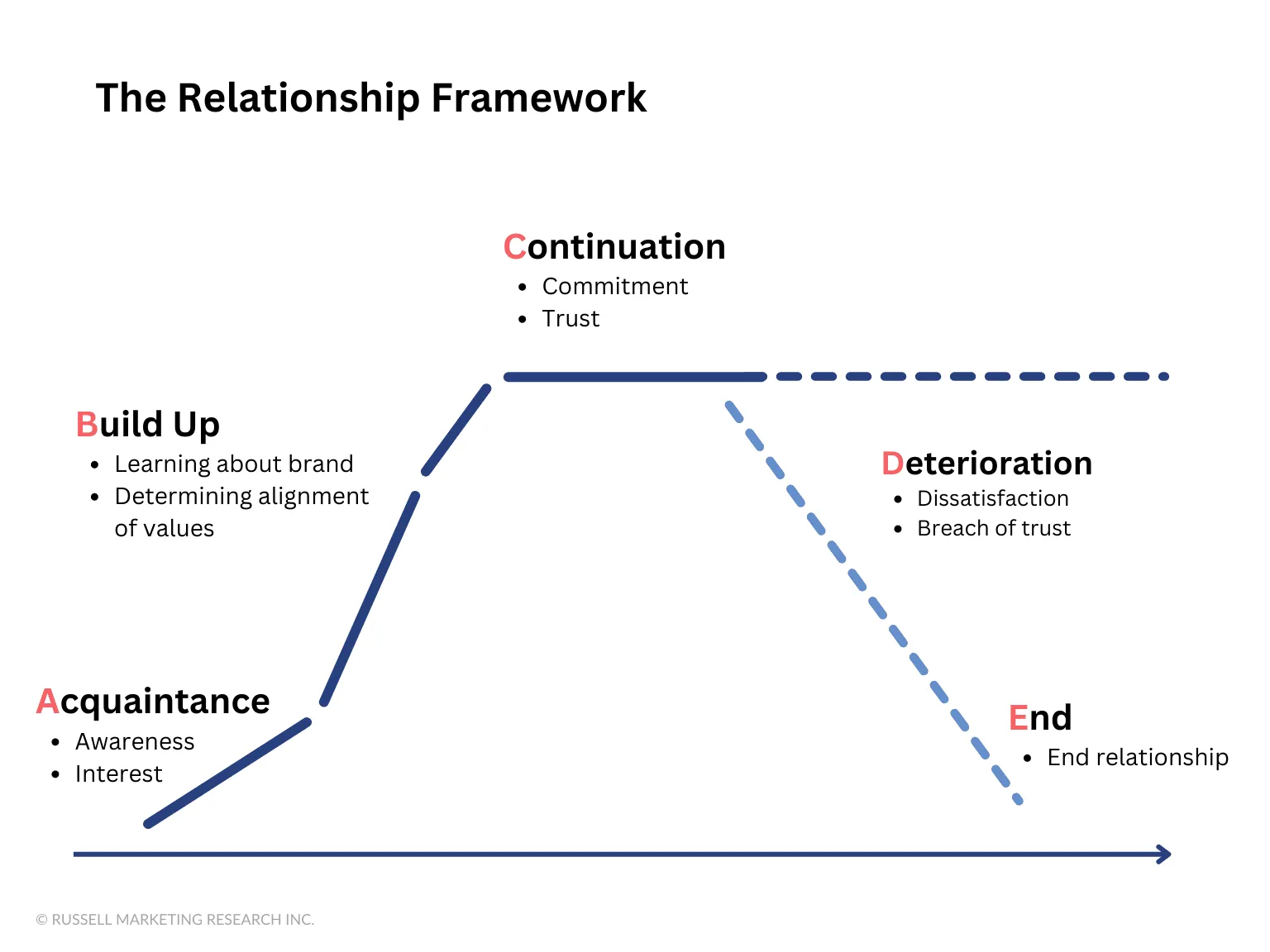
The diagram shows five stages. The line rises from Acquaintance through Build Up to Continuation. From Continuation, one dashed line stays level, showing an ongoing relationship; another descends through Deterioration to End. These are possible paths, not measured values or a fixed timetable.
- Acquaintance: awareness and interest.
- Build Up: learning about the brand and determining alignment of values.
- Continuation: commitment and trust.
- Deterioration: dissatisfaction and breach of trust.
- End: the relationship ends, described as Termination in the article below.
The Five Stages
The analogy prompts a different set of research questions at each stage of the customer relationship.
Acquaintance is the process of becoming aware of and attracted to a product or brand. When this article was published in 2023, ChatGPT was a useful example: awareness had risen quickly, and many people were trying an AI text generator for the first time. Our February 2023 survey captured that early stage of the category.
Build Up describes the early period when customers are discovering benefits and deciding whether a brand fits their needs and values. Research at this stage should examine what sustains the initial interest, what creates disappointment, and what would make the customer invest further in the relationship.
Continuation is a time of increasing dependency that can lead to long-term commitment and loyalty. Like a long-term relationship, this phase depends on reliability, trust, and a clear sense of what to expect. Brands can stumble by making changes that weaken that reliability, or by leaving the experience unchanged long enough for it to lose relevance. Product ecosystems, replenishment programs, and loyalty programs are some of the ways companies encourage continuation. Market research can help a brand understand which parts of the relationship customers value and where dissatisfaction is beginning to appear.
When the brand enters the Deterioration phase, dissatisfaction grows. A breach of trust, a change in value, or a stronger alternative may cause customers to reconsider the relationship. Research can identify the source of that deterioration, determine whether repair is realistic, and show what the brand would have to change to rebuild trust.
Finally, Termination is the point at which the customer leaves. It may happen gradually because the brand no longer provides a reason to stay, or suddenly after a change in performance or values. Research with former customers can distinguish a reversible lapse from a relationship that has genuinely ended.